The Parthenon - Architecture, Design, and Symbolism of Athens’ Sacred Temple
Explore the Parthenon, the architectural masterpiece of ancient Greece — a temple to Athena embodying mathematical harmony and divine proportion.
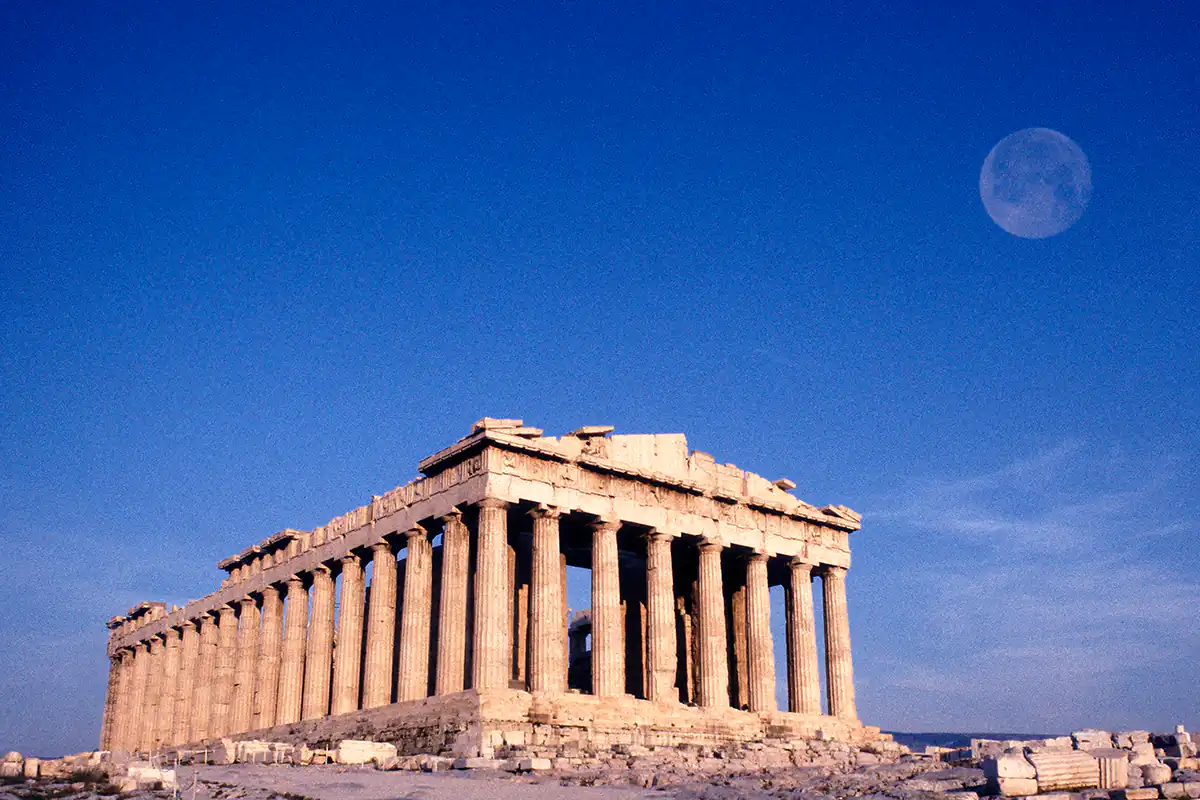
At the center of the Acropolis stands the Parthenon, a temple so perfectly proportioned that it has come to define the very idea of classical beauty.
The Parthenon bathed in golden light — harmony made stone.
🏗️ The Vision of Pericles
Commissioned in 447 BCE during the Golden Age of Athens, the Parthenon was the culmination of Pericles’ building program — a declaration of both gratitude and power.
Architects Ictinus and Callicrates designed it under the supervision of Phidias, whose genius extended to sculpture and iconography. Every stone was quarried from Mount Pentelicus, whose marble glows with a golden hue under Athenian light.
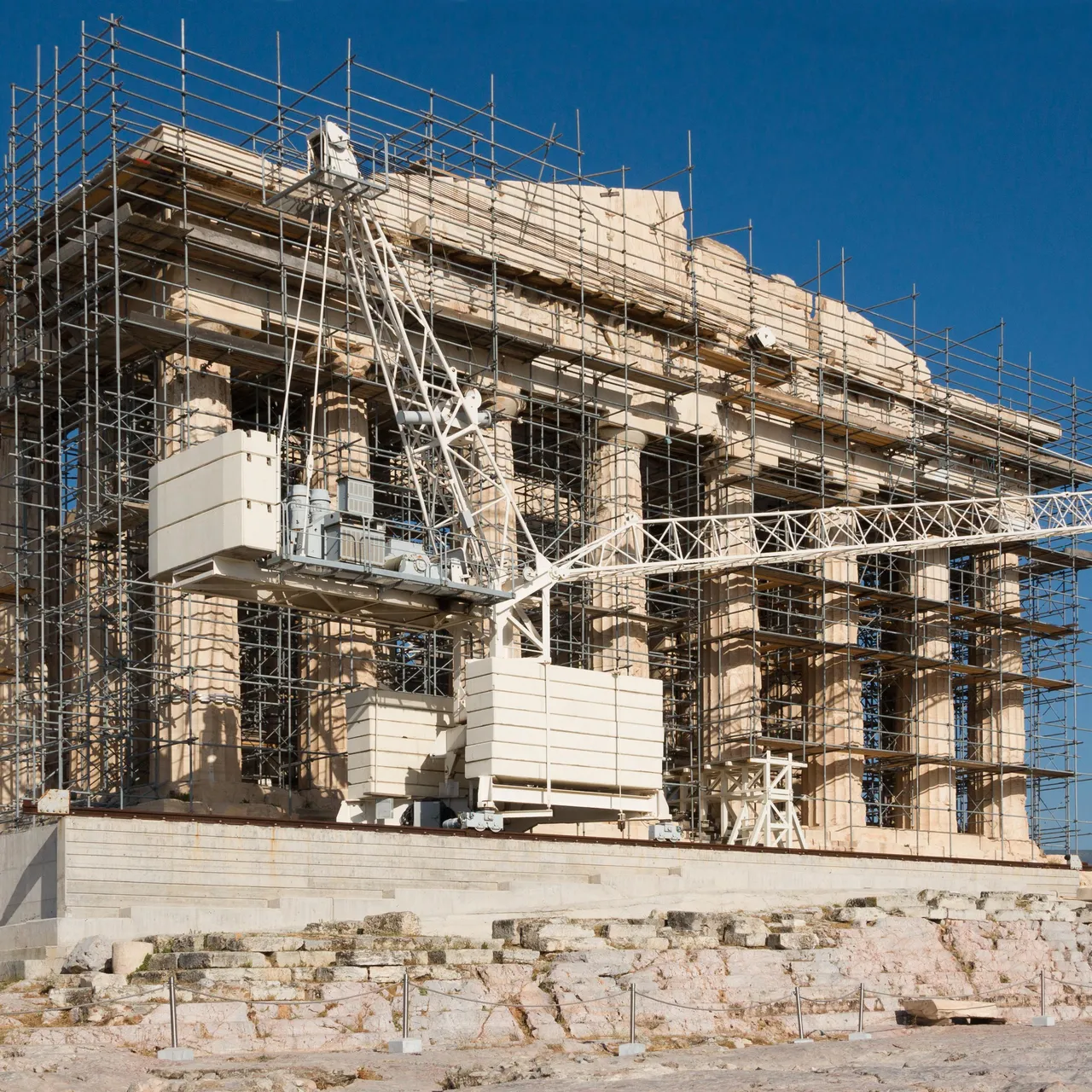 Precision in marble blocks and joints — the craft behind perfection.
⚖️ Harmony in Geometry
The Parthenon embodies Doric perfection:
- Columns: 8 by 17, slightly inclined inward
- Stylobate: gently curved to correct optical illusion
- Entasis: subtle swelling of the columns, conveying strength and vitality
This interplay of correction and illusion creates a living architecture — a structure that breathes, poised between the human and the divine.
“The Parthenon is not built — it is born.”
— Le Corbusier
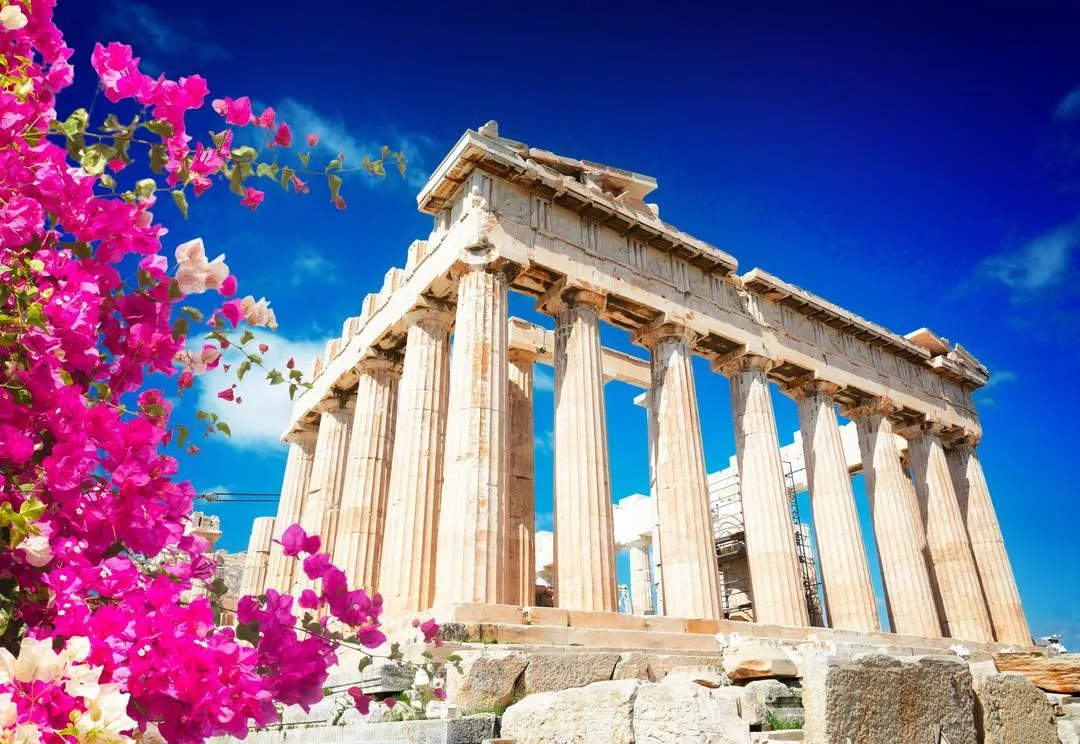 Subtle curvature and entasis create optical perfection to the human eye.
🎨 Sculpture and Symbolism
Inside stood Phidias’ colossal statue of Athena Parthenos, nearly 12 meters tall — gold, ivory, and precious stones reflecting her divine authority.
The pediments depicted her birth from Zeus’ head and her contest with Poseidon for the city’s patronage.
The metopes illustrated mythic struggles — gods versus giants, Greeks versus Amazons — eternal metaphors for order conquering chaos.
Most remarkable of all was the Ionic frieze encircling the cella: the Panathenaic procession, where mortals joined gods in celebration — the civic soul of Athens immortalized in stone.
💔 From Temple to Ruin
Over centuries, the Parthenon transformed:
- A Byzantine church dedicated to the Virgin Mary
- An Ottoman mosque with a minaret
- A powder magazine, tragically exploded in 1687
Even shattered, it remains the supreme expression of harmony — a structure so mathematically refined that its ruin continues to define beauty.
The Parthenon is not a relic of the past — it is a measure of the human spirit.
About the Author

Architectural Scholar
A history enthusiast and traveler, I created this site to help visitors experience the Acropolis and its ancient wonders.
Tags
Comments (0)
Loading comments...